
We’re thrilled to share the work of Romina Zabihian, an artist whose practice bridges beauty and resistance.
You might recognize Romina’s style. She’s been shaping ARTogether’s design and brand aesthetic for the past few years. Beyond her visual design work, Romina creates evocative artworks using ink and tea that speak to something deeper. As an alumni of Artist Mentorship Hub and Residency Program and the artist behind the 2024 solo exhibition Dots: A Tale of Unity, Romina’s work explores themes of community, connection, grief, and resilience, inviting viewers into stories that transcend borders.
Through her art, Romina amplifies the voices of social movements, particularly the ongoing struggle for freedom in Iran, transforming distant headlines into intimate human narratives that demand our attention and care.
Q – Tell us more about the work you are creating right now. How it’s connected to the social movement that is unfolding in Iran.
Right now, my work is centered on witnessing and refusing erasure.
As an Iranian woman who lived under the Islamic Republic for most of my life and experienced discrimination as both a woman and a minority, along with restrictions on education and imprisonment, and who later came to the United States as a refugee, I cannot separate my art from what is unfolding in Iran.
This fight for freedom is not abstract to me. It is personal.
It is friends who are in prison.
It is friends whose relatives were killed.
It is my people being massacred, imprisoned, tortured, and executed.
It is the lived trauma of generations who have endured 47 years of repression.
For nearly five decades, Iranians have lived under gender apartheid, censorship, and extreme interpretations of Sharia law imposed through violence.
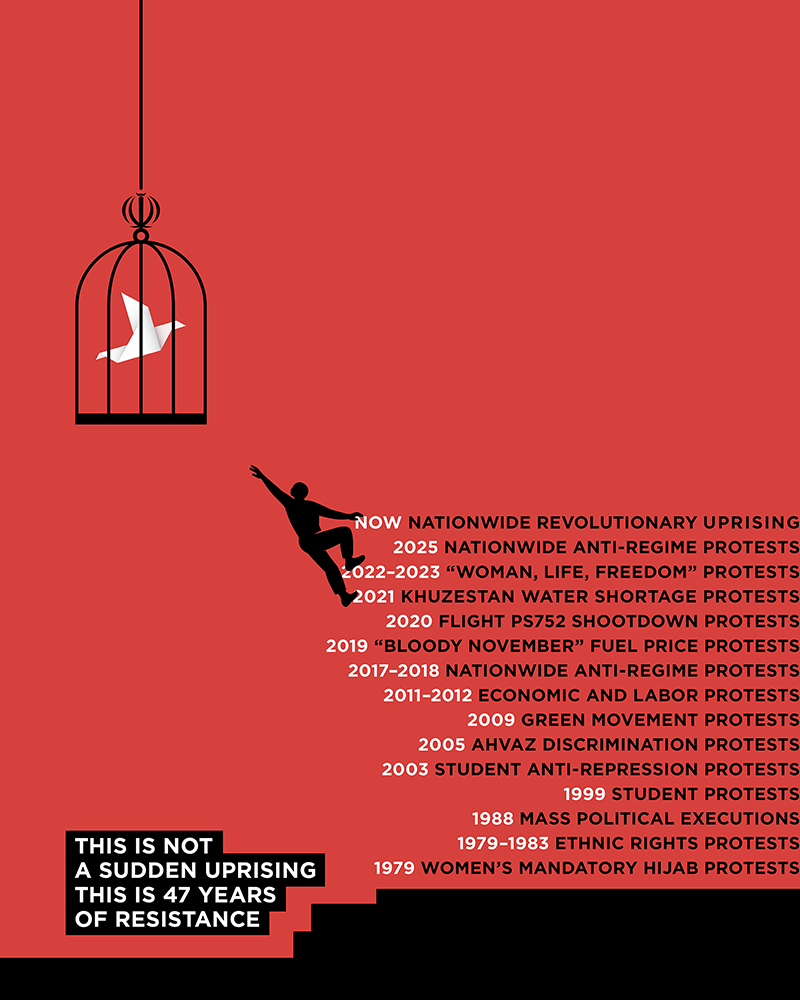
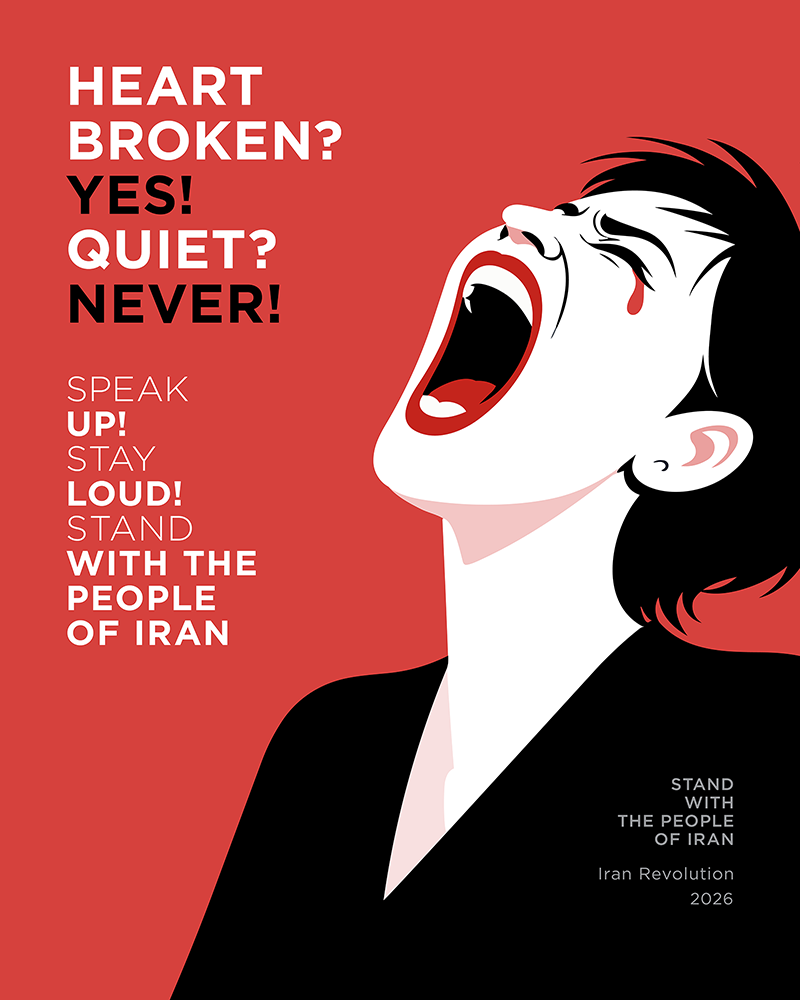
My recent poster series, including #IranMassacre and Ongoing Fight for Freedom, were created as immediate visual responses to state violence. These works are not decorative. They are visual testimony. They reflect how the Iranian people have been fighting for freedom for decades, and how their voices are still often ignored while repression continues in silence.
What deeply informs my work is the gap between narrative and lived reality.
There is no question that war is awful. But what deeply hurts me is that we live in a world where governments, political factions, and even activists often practice selective engagement. It sometimes feels as if people do not truly care about human beings; instead, they care about who is doing the killing. At times, I see outrage expressed in ways that seem more about gaining political or moral points than genuinely standing for human dignity.
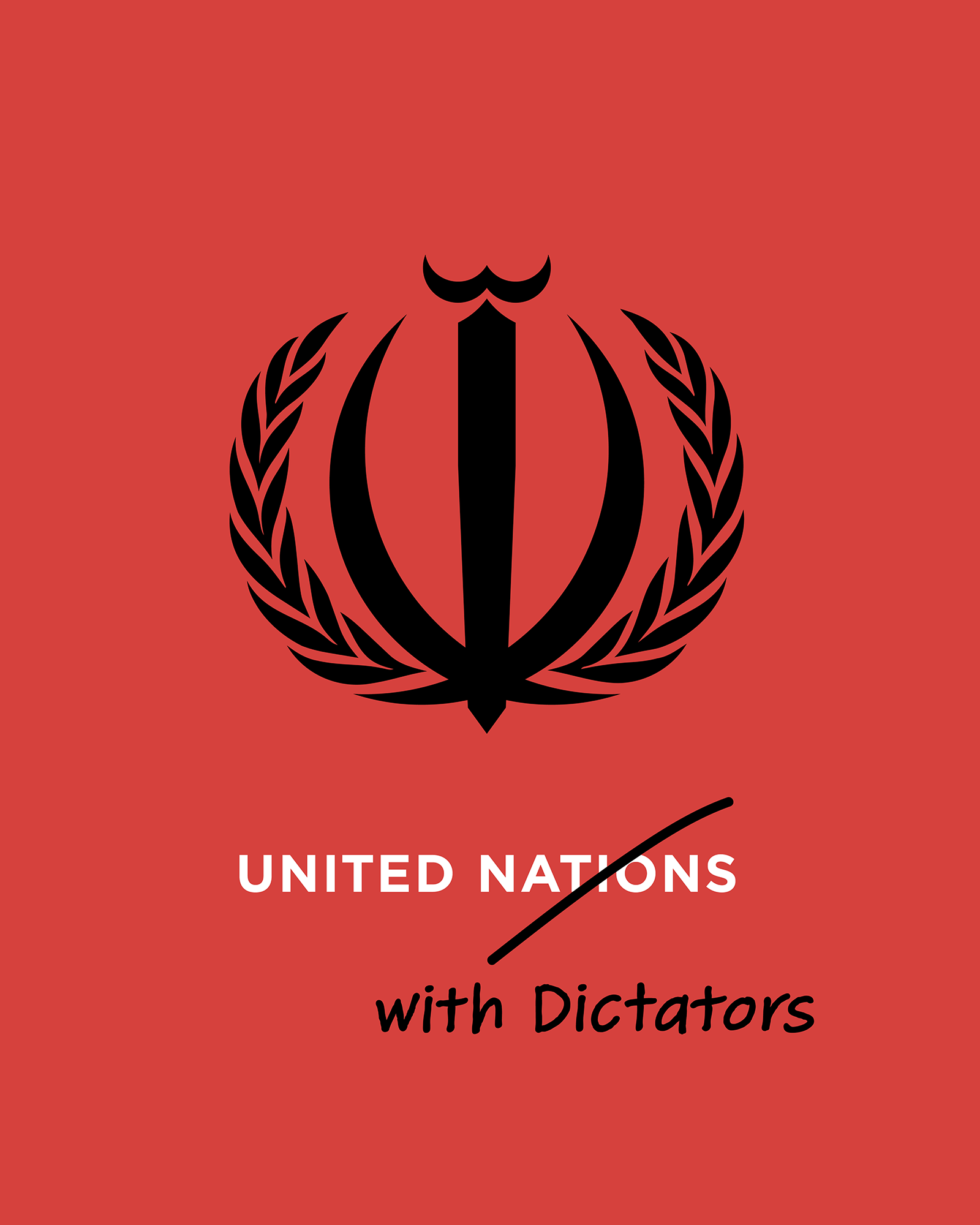
Just two months ago, we witnessed what many consider the deadliest massacre in Iran’s history during peacetime—when the country was not at war. This was the state killing its own people, and yet there was almost no international outrage or meaningful support. Even more painfully, instead of taking serious action, the United Nations Secretary-General, António Guterres, congratulated Iran’s authorities on the anniversary of the Islamic Revolution. At the same time, the Islamic Republic was elected Vice-Chair of the U.N. Commission for Social Development — a body meant to promote democracy, equality, tolerance, and non-violence. For many Iranians, this contradiction is deeply heartbreaking.
I grew up in schools where authorities made children chant “Death to America” and “Death to Israel” every morning. Flags were placed on the ground for students to walk over. We were taught hostility before we even understood geography. Meanwhile, national resources have been diverted to ideological agendas abroad, while many communities inside Iran have lacked basic necessities.
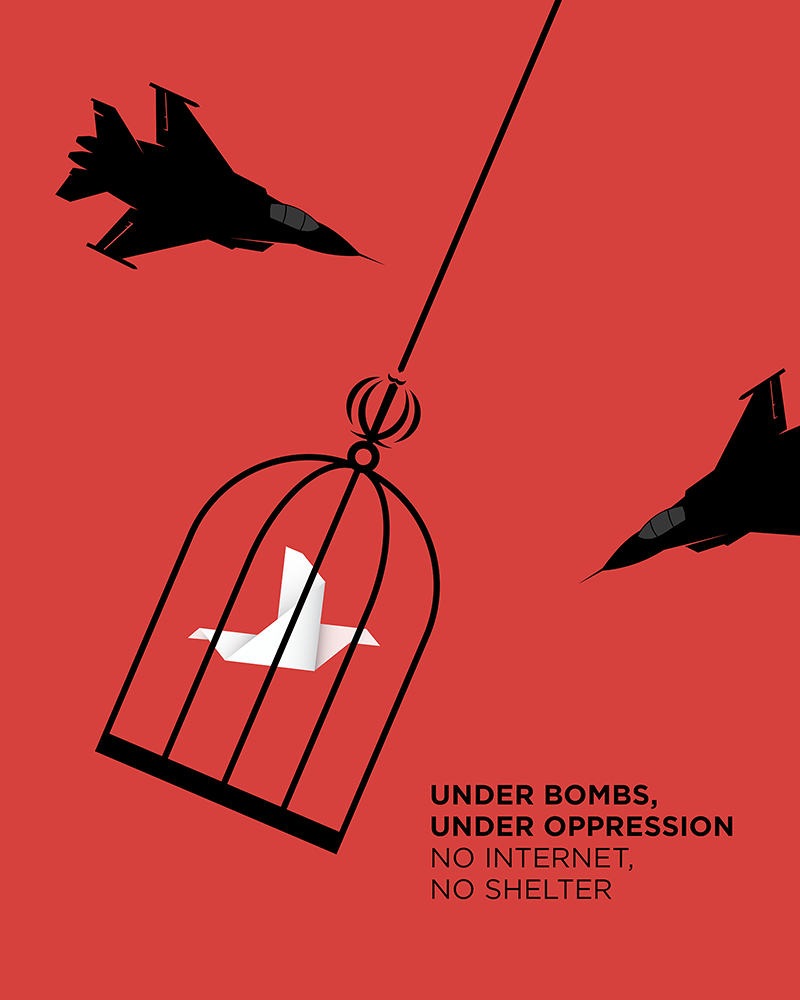
One would assume that a government publicly chanting for war for 47 years and investing heavily in missiles and military expansion would at least build shelters for its own people. Yet when Iran comes under attack by Israel and the United States, there are no shelters, no warning sirens, and no protection. Instead, even in moments of crisis, the regime shuts down the internet and communications while continuing to threaten, arrest, and kill its own citizens.
For 47 years, the Iranian people have tried to show the world that they are not their government — that they carry a rich culture, a deep history, and a persistent fight for democracy. That distinction is constantly erased in global conversations.
If the international community had held this brutal regime accountable over the past 47 years instead of normalizing it, we would likely not be facing this situation today, and the Iranian people would not be caught in its consequences.
My work tries to restore that distinction.
It is an attempt to create visual testimony and honor the courage of the Iranian people.
Q – Social movements can feel overwhelming or distant to people who want to help but don’t know how. What role do you think art plays in turning awareness into action?
I believe art slows people down.
News cycles are fast. Narratives are politicized. Social media rewards outrage more than nuance. Art creates pause. It creates space for complexity.
Art rehumanizes what politics flattens.
Art allows us to ask harder questions.
Who is being centered?
Who is being erased?
Who is speaking, and who is being spoken for?
With my background in psychology, I understand how long-term trauma shapes communities. Many Iranians carry decades of collective trauma, including the systematic erasure of Iran’s rich cultural heritage while extreme interpretations of Sharia law are imposed on the entire population through deeply inhumane practices, with minorities facing even harsher suppression.
Yet international conversations often reduce Iran to geopolitics. Worse, when Iranians speak about their lived experiences, far too often, they are dismissed or mischaracterized.
Art can interrupt that.
It can transform a foreign conflict into a human story.
It can make people feel before they debate.
It can move people from passive sympathy to informed solidarity.
because real action must begin with listening to those who are directly affected.
Q – For artists or creatives reading this who want to use their work for social good—what’s one piece of advice you would offer ?
Stay rooted in truth, not trend.
It is easy to be pulled into performative activism, to align with what is loudest or most visible. But social good requires depth, not noise.
If you speak about something, ask yourself:
Have I listened to those who lived it?
Am I amplifying voices, or replacing them?
Am I willing to hold complexity, even when it is uncomfortable?
Also, protect your humanity.
Working at the intersection of art and activism is emotionally demanding, especially when the movement is personal and your own people are suffering.
You cannot create sustainably from burnout or despair.
Art for social good must come from integrity, not reaction.
From lived experience, not borrowed slogans.
From courage, not convenience.
And above all, remember that nuance is not weakness.
It is responsibility.

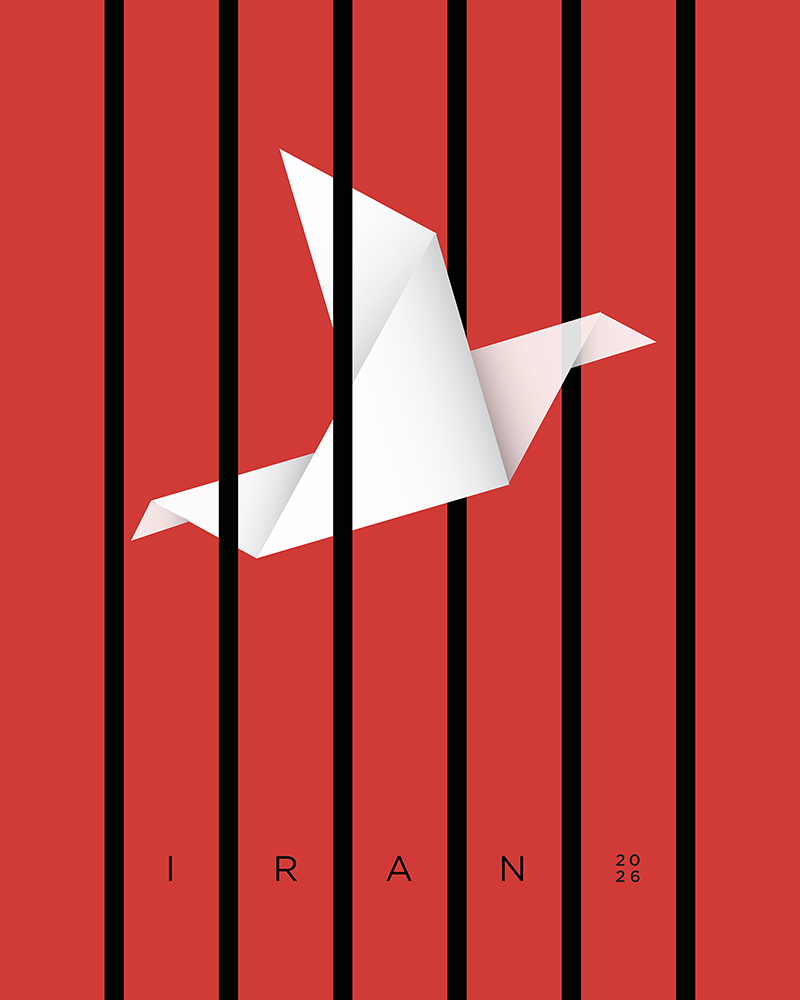
The Story Behind This Poster
I designed this poster in honor of Hossein Shanbehzadeh, to share his story and to give a glimpse of what free speech looks like in Iran.
On May 1, 2024, Ali Khamenei’s official account on X posted an image with a caption that ended without a period. Hossein Shanbehzadeh—an editor, translator, and activist—pointed out the missing punctuation by replying with a single character: “.”
Within a short time, his reply received more than 17,000 likes, while the original post had received about 8,200 likes. Following this response, Hossein Shanbehzadeh was arrested, and he is still in prison.
During their second visit at Evin Prison, he gave a paper crane to his brother and said:
“They say if you make a thousand paper cranes, your wish will come true. I make one paper crane a day so that on the thousandth day I reach my only wish: freedom.”
To see more works from this series, visit her Instagram page.
Bio
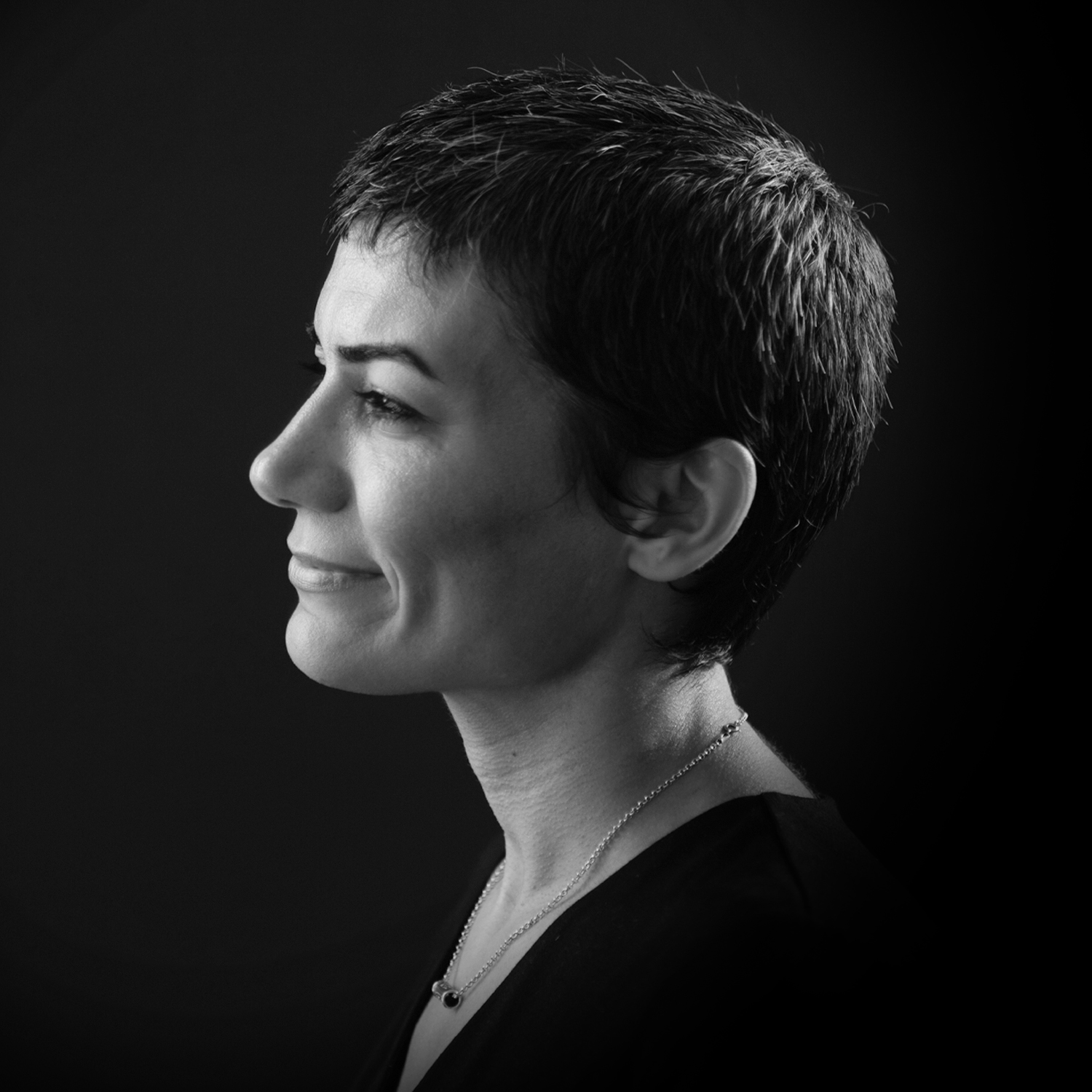
Romina Zabihian is a visual designer and artist based in San Francisco. Her background in psychology, along with her firsthand experiences of discrimination as a woman and her observations of the struggles faced by minorities, deeply informed her work. She explores themes of identity, complex emotions, resilience, justice, and unity, using various techniques and mediums to tell stories of connection. She adapts her visual language and materials to each project, allowing the narrative to shape the form and medium.
Throughout her career, alongside her work in the field of design, she has showcased her artworks through solo and group exhibitions. Romina is the author and illustrator of Dots: The Tale of Unity. More of her work can be found at rominazab.com.