
Guest blog written by Trisha Mah
As a budding collagist, I had been wanting to connect with other artists in an informal way, and maybe even make some art without the pressure of “doing it right”. I was happy to discover ARTogether’s Gather in Art and Community night and after a little nervousness about going alone, I let my curiosity pull me in to see what it could offer.
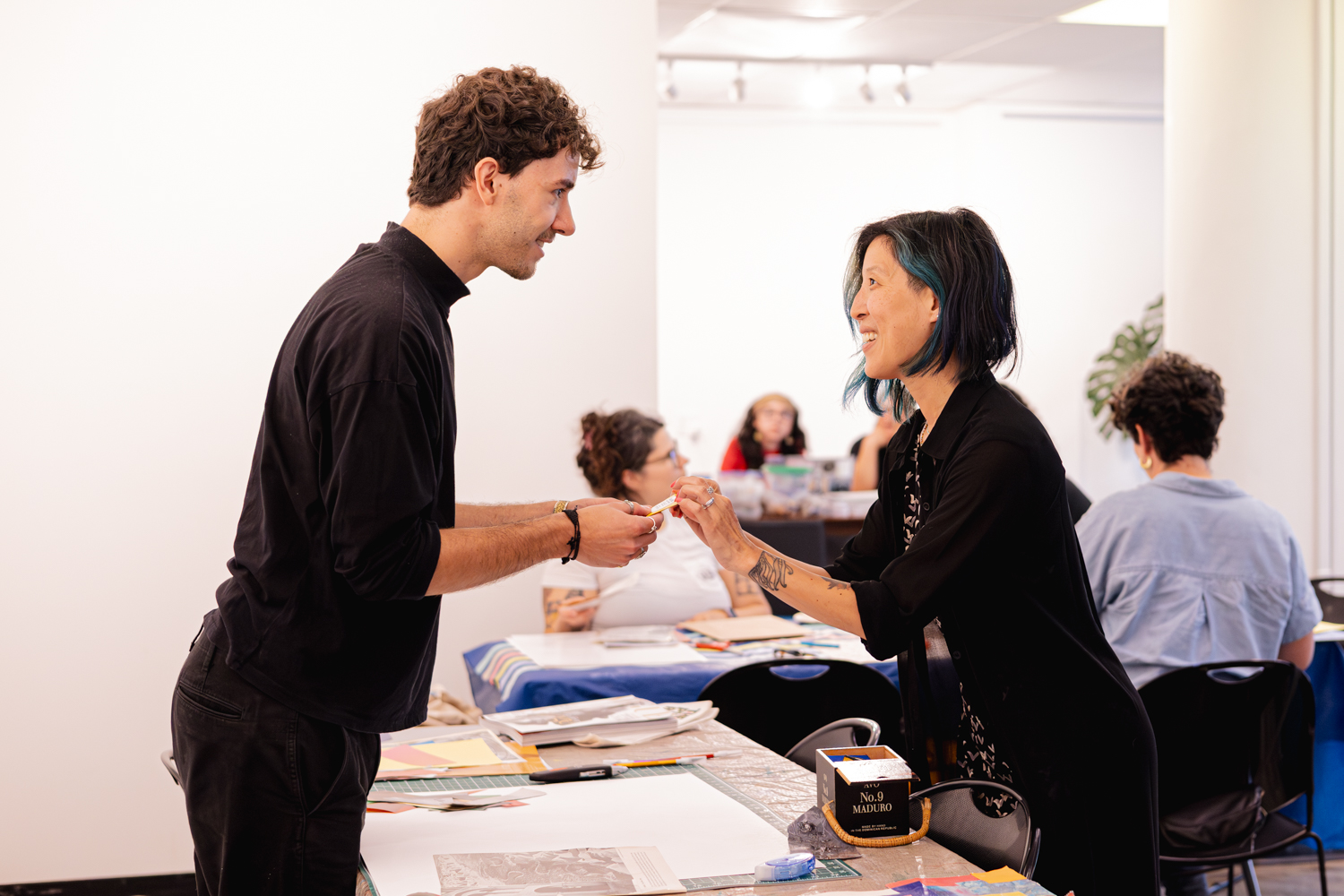
Now it’s become one of my favorite places to make art in-community with others. I love how welcoming the space is: staff quick to greet you when you arrive, quality snacks to nourish your body, tables full of art supplies ready to be played with, and walls displaying gorgeous work by local immigrant and refugee artists, sometimes including the artists in residence who have studios next door. And the event is entirely free, a gift to the community to create and share.
A Small, Mighty Act of Resistance
The space embodies ARTogether’s mission of fostering compassionate communities for immigrants and refugees. While I’m not an immigrant or refugee myself, I regularly witness folks with those identities flourishing at these gather-ins. I’ve had the pleasure of connecting with many of them, along with other community members, sharing why we love art, what mediums we practice, and swapping stories about our creative and personal journeys. During a time when U.S. leaders are doing their best to disconnect us from each other and enforce an “us versus them” narrative, having these exchanges is revolutionary.
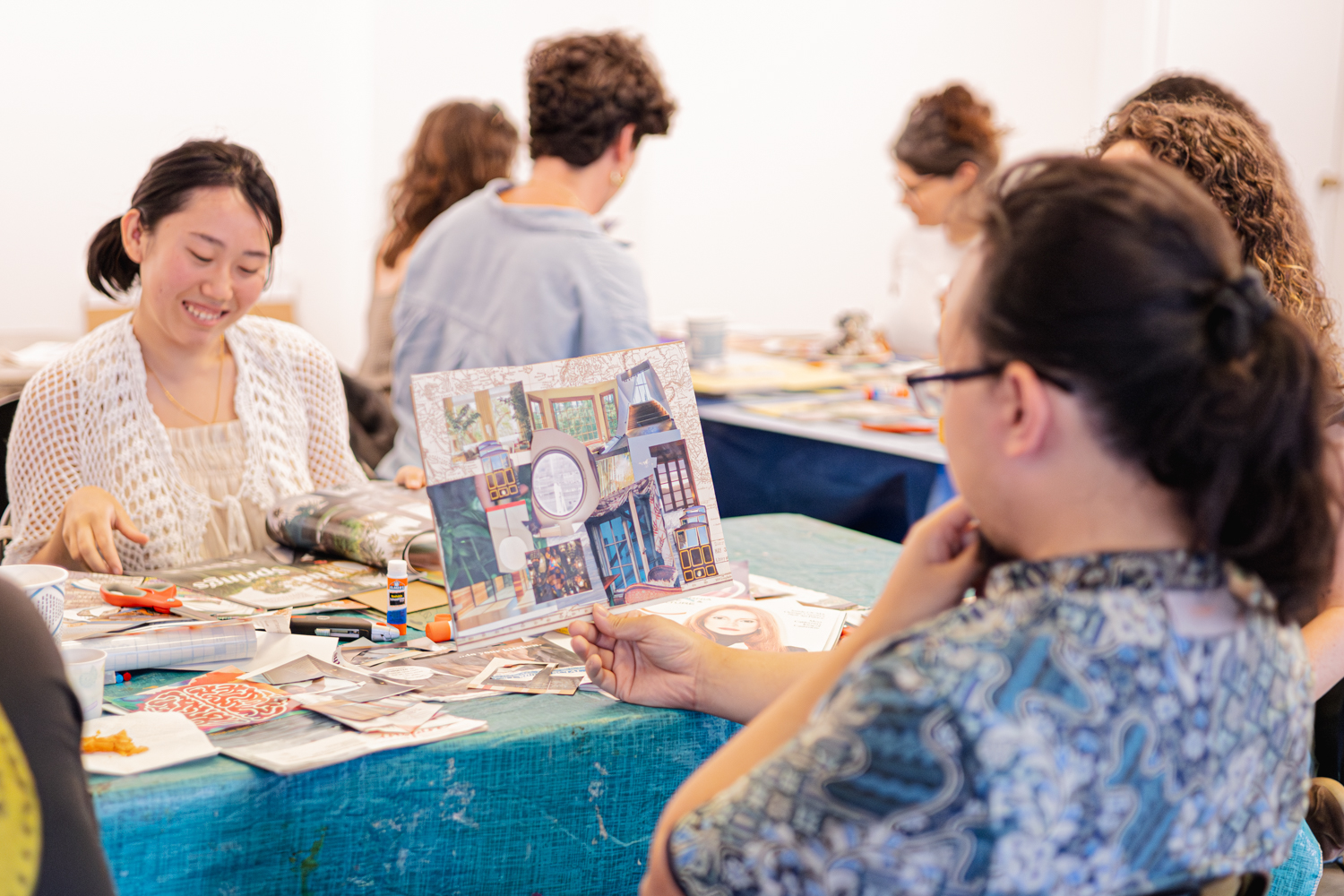
The art and creativity made during these gather-ins are spectacular too. People come with so many different skills and levels of experience: some wanting to parallel play with a current project, others trying a new medium, or, like me, practicing my craft with the materials provided while chatting with other artists.
The Freedom to Just Play
As a practicing artist, I love how a casual space like this removes the pressure that comes with more formal art settings. There’s no expectation of finishing something polished, no critique to brace for, no need to explain your process. You can parallel play, experiment, or just sit with your hands in your materials while talking to the person next to you. That freedom is rare, and it’s exactly what lets people show up as they are.
The whole experience nourishes my entire being. I’ve arrived after a hard day, or carrying heavy feelings, just grateful I made it. But I always leave inspired to keep creating, and connected to the people I talked with. Some of these connections have grown my support network as I keep building a life as a working artist. Beyond the activity itself, ARTogether staff have introduced me to additional art spaces, like Kearny Street Workshop, expanding my art community and opportunities. I’m forever grateful for these connections and for ARTogether’s generosity in sharing them with me.
See You There
ARTogether’s Gather-in is more than an event. It’s a gathering of people looking to connect. No matter our background, art and creativity bring us together to get curious, soak in joy, and build community. And it’s entirely free, which matters: it means no one is priced out of a space built for connection.
I look forward to attending next month’s Gather-in. Hope to see you there too.
Gather In Art and Community Nights are every second Wednesday of the Month. Drop in between 5 – 8pm for free art making in community. See our events page for more info!

Trisha Mah (she/they) is a Chinese-Japanese American collagist and taiko artist from the Bay Area whose analog work — featured in East Bay Open Studios’ 2025 Emerging Artist Program — explores cultural identity, intergenerational memory, and liberation through layers of torn paper, found imagery, and lived experience. She performs and teaches taiko with Queer Taiko, Club Hachijo, and as a beginner instructor at Berkeley Buddhist Temple, bringing the same embodied, community-rooted presence to taiko that she brings to her collages. For Trisha, art is ancestral inheritance — a philosophy that connects directly to her fifteen-plus years as an educator and activist in nonprofits, where she has led youth programs, counseled students, and developed social justice curriculum. They bring organizational leadership and community-centered practice to every space they create, fostering intersections of creativity, healing, and collective imagination.
You can learn more about Trisha and her creative practices at www.trishamah.com or on Instagram @_creativemah_